
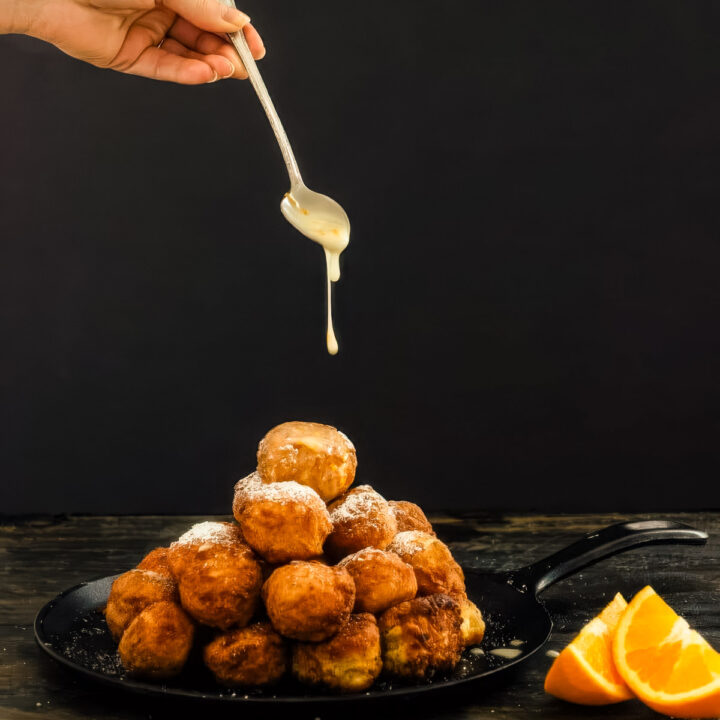
There's something about homemade glazed donut holes that never fails to make everyone happy. They're soft, fluffy, and just the right size for enjoying a few with morning coffee.
I've made homemade donut holes countless times for weekend breakfasts and holiday brunches, and they're always gone before the coffee finishes brewing. The dough comes together in minutes, and because they fry so quickly, you can have warm, golden donut holes on the table in under half an hour!
The orange glaze adds a light, citrusy sweetness that sets them apart from store-bought versions (plus fresh donuts just out of the fryer are incredible). Once you try these easy glazed donut holes, you'll find yourself making them all the time!
I'm a big believer in eating healthy breakfasts throughout the week and indulging on the weekends. I love making a big batch of baked oatmeal cups or a cottage cheese egg bake to grab-and-go during the week, then enjoying these hot, glazed donut holes on a lazy Sunday.
Jump to:
Ingredients
For the dough:
- Granulated sugar: This adds just the right amount of sweetness to the dough. You don't want them too sweet since the orange glaze adds enough on its own.
- Unsalted butter
- Buttermilk: This helps keep the dough soft and fluffy. If you don't have buttermilk, stir 1½ teaspoons of lemon juice or vinegar into regular milk and let it sit for 5 minutes.
- Whole milk: Almond milk or 2% will also work.
- All-purpose flour: Be sure to spoon this (not scoop) into your measuring cup and level it.
- Baking powder: This helps the donut holes puff up as they fry.
- Salt
- Vegetable oil: Enough to fill your pot with about 2 inches of oil for frying. Peanut or canola oil will also work; just make sure you use an oil with a very high smoke point.
For the orange glaze:
- Powdered sugar
- Fresh orange juice: You can add a bit more if you prefer a thinner glaze.
- Orange zest: This adds loads of fresh orange flavor!
Instructions
Make the orange glaze:
- In a medium bowl, sift the powdered sugar to remove any lumps.
- Stir in the orange juice and zest until the glaze is smooth and glossy. If the glaze seems too thick, add up to 1 additional tablespoon of juice.
- Cover the bowl and set it aside while you make the donut holes.
Make the dough:
- In a medium mixing bowl, whisk together the sugar, melted butter, buttermilk, and milk until well combined.
- In a separate small bowl, whisk together the flour, baking powder, and salt.
- Add the dry ingredients to the wet mixture, folding gently until it's just combined. The dough should be soft and slightly sticky (don't overmix)!
Fry the donut holes:
- Pour the vegetable oil into a large, heavy-bottomed pot, filling it about 2 inches deep. Heat over medium-high until the oil reaches 350°F. (If you don't have a thermometer, flick a small drop of water into the oil; if it sizzles right away, it's ready.)
- Scoop about ½ tablespoon of dough at a time and roll into balls, or use a small cookie scoop.
- Carefully drop several dough balls into the hot oil, frying in batches to avoid crowding the pot. Fry for 1-2 minutes per side, turning as needed, until they're golden brown all over.
- Use a slotted spoon to remove the donut holes and transfer them to a baking sheet lined with paper towels to drain off any excess oil.
Glaze and serve:
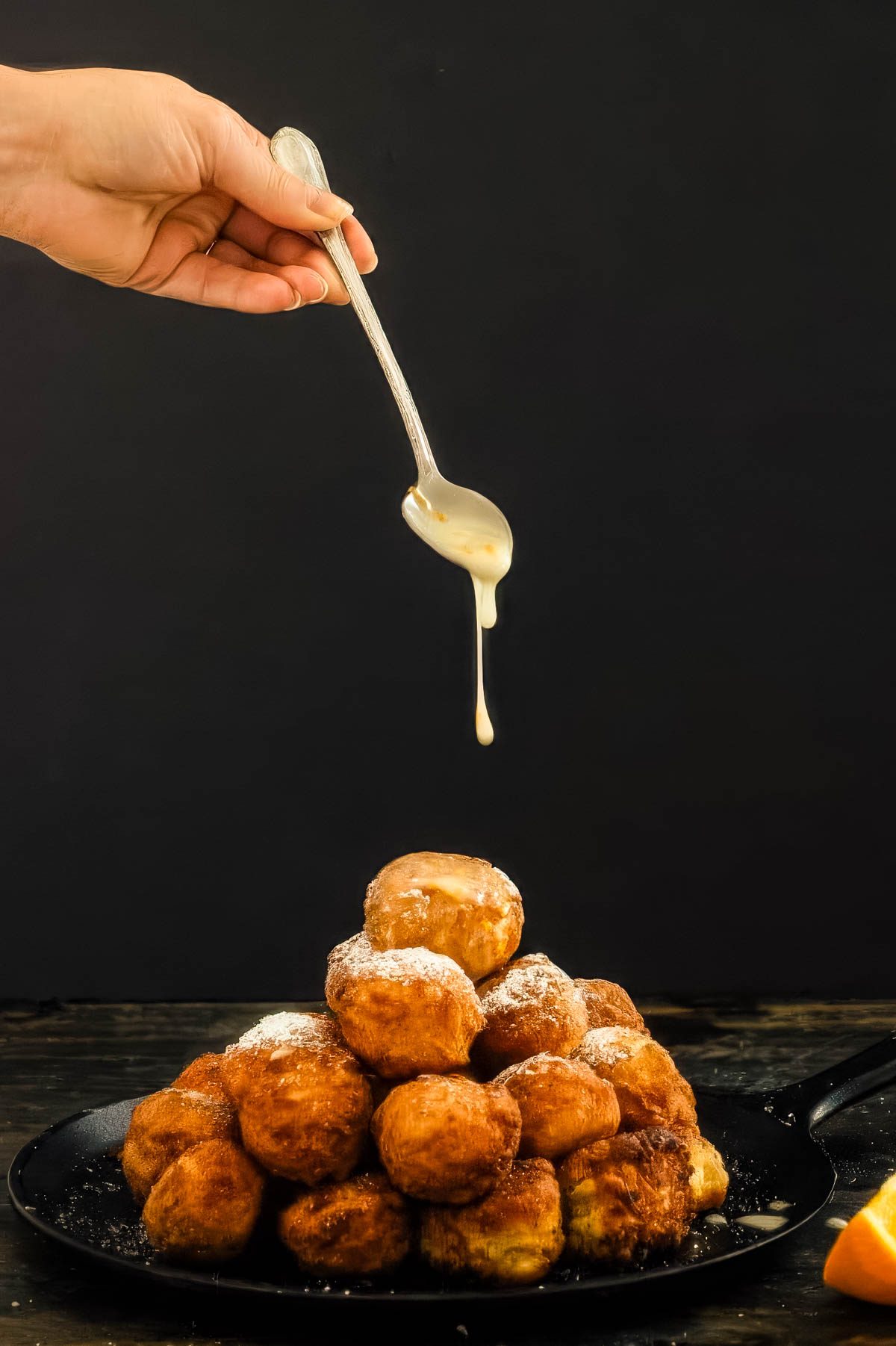
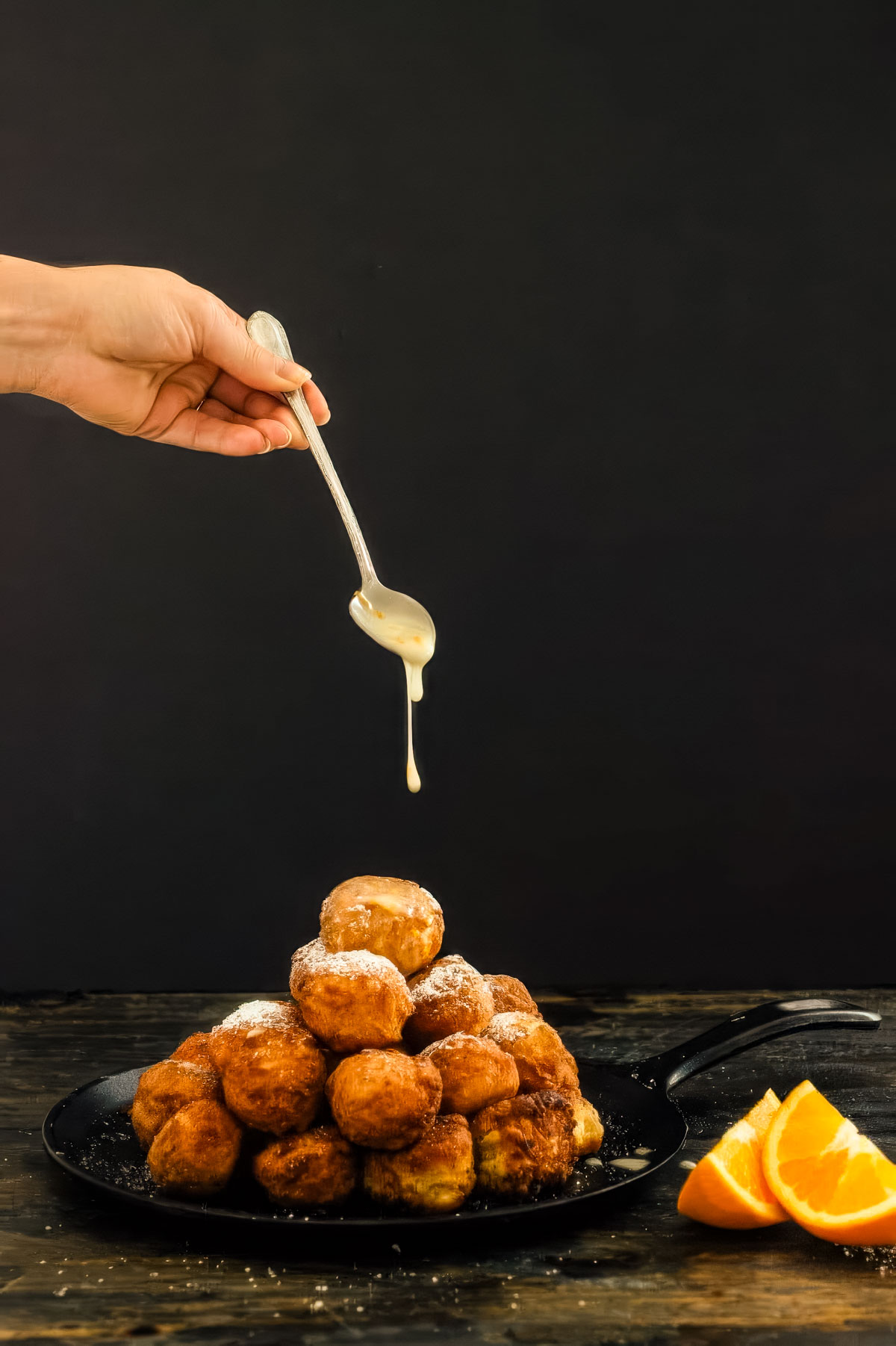
- Place a wire rack over a baking sheet. Dip each donut hole into the orange glaze, turning to coat, then transfer to the rack to let any excess glaze drip off.
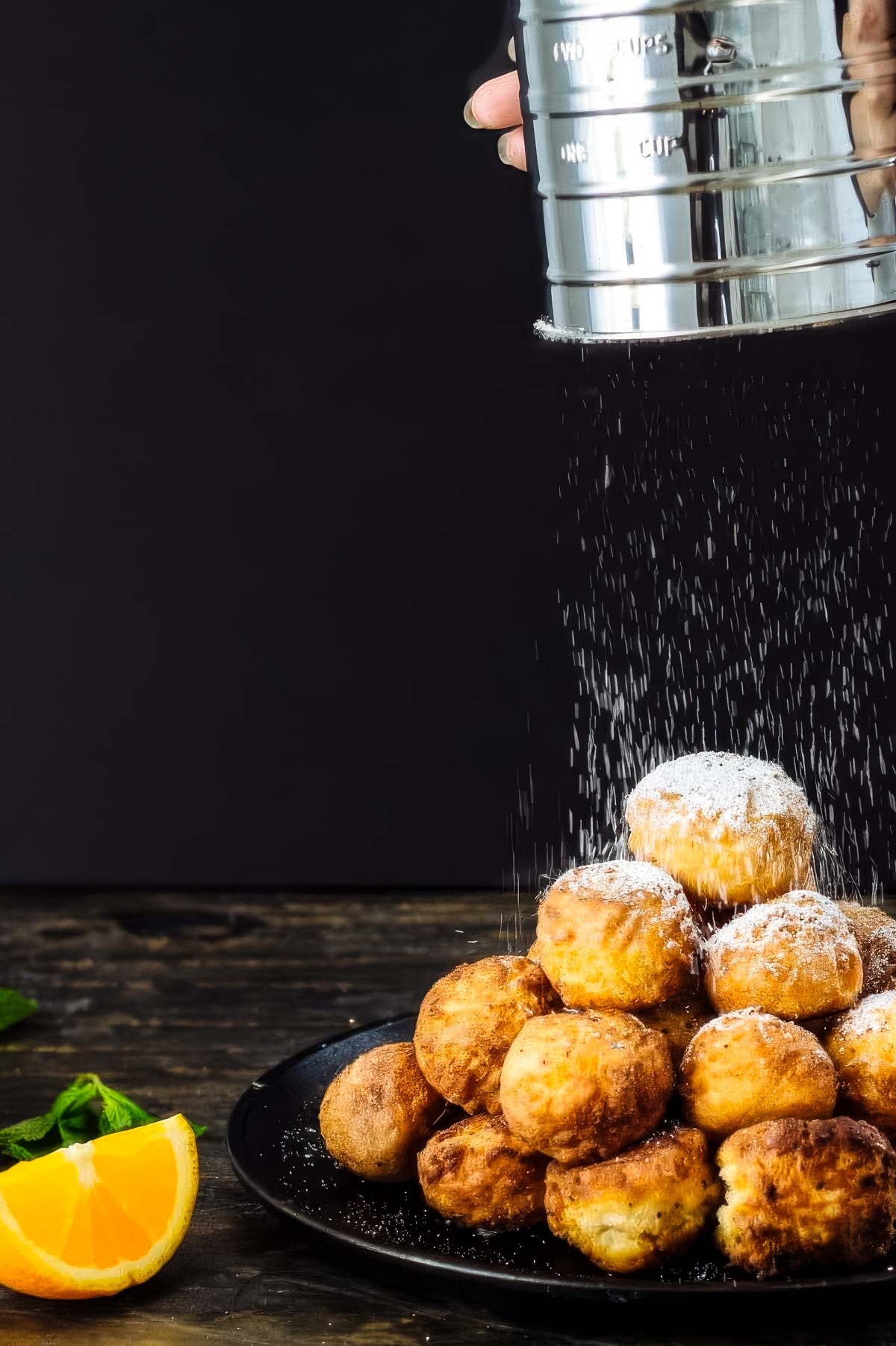
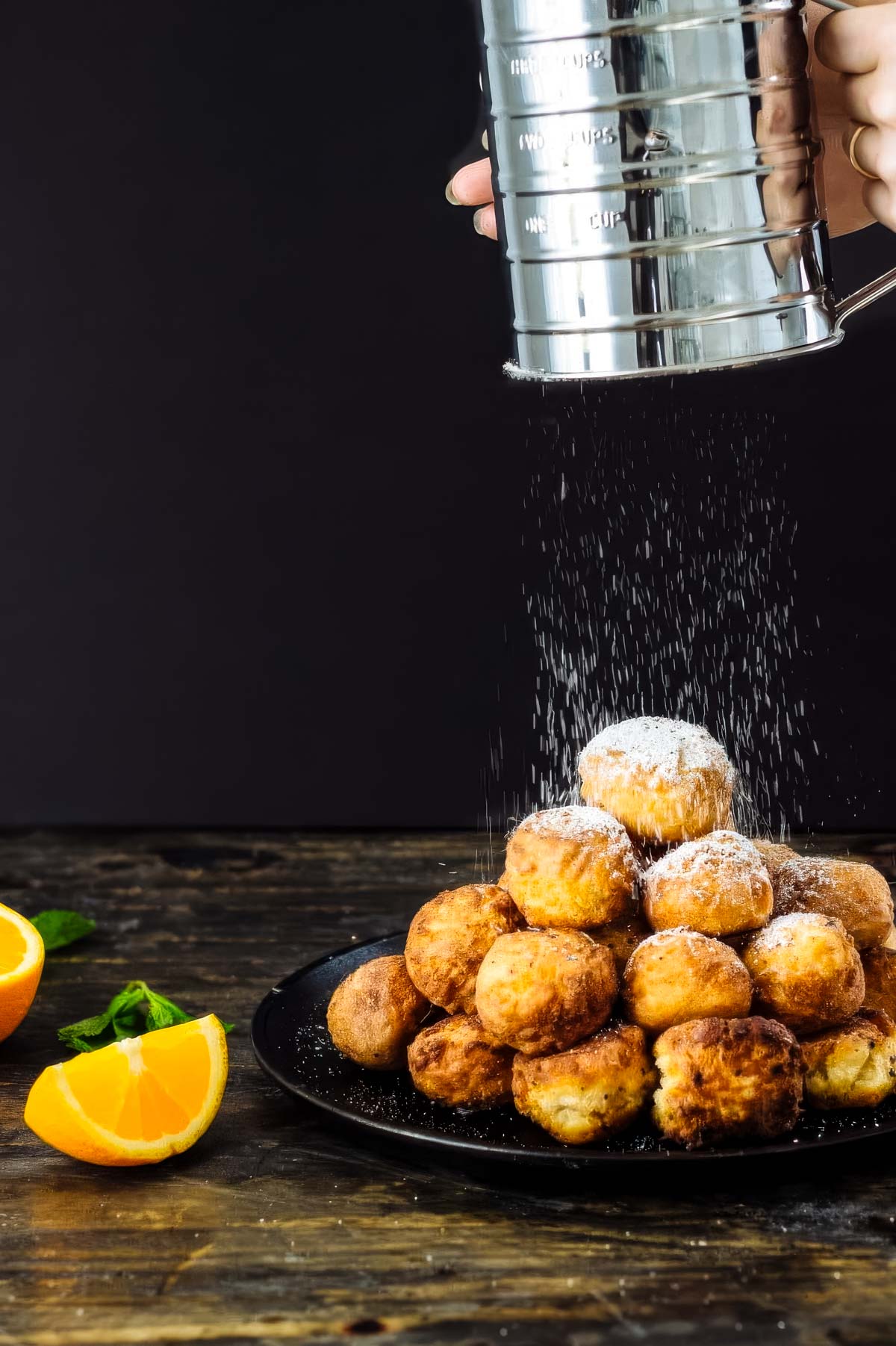
- Let the glaze set for a few minutes before serving. If you'd like them even sweeter, sprinkle them with powdered sugar once they've cooled.
Equipment Needed
- Mixing bowls (medium and small)
- Whisk and rubber spatula
- Measuring cups and spoons
- Heavy-bottomed pot or Dutch oven
- Deep-fry thermometer
- Slotted spoon or spider strainer
- Paper towels
- Wire cooling rack
- Baking sheet (or just lay paper towels under the rack to catch any drips from the glaze)
- Zester or microplane
- Small cookie scoop (optional)
Tips
- Keep the oil at 350°F. This is the most important step for perfect homemade donut holes. If the oil gets too hot, they'll brown too quickly and stay raw inside; if it's too cool, they'll absorb extra oil and become greasy.
- Fry in small batches. Adding too many at once drops the oil temperature. Four to six at a time is a good number.
- Use a small cookie scoop. It makes portioning faster and helps the donut holes cook evenly so they all finish at the same time.
- Don't overmix the dough. Fold the wet and dry ingredients together gently until it's just combined.
- Test one first. Fry a single donut hole to check the timing and oil temperature before adding the rest, then adjust the heat as needed. This is especially important if you don't have a thermometer.
- Let them cool before glazing. Warm donut holes will absorb too much glaze and lose their crispiness. Give them a good 5-10 minutes before dipping them into the glaze.
- Fresh zest makes a difference! Bottled juice or dried zest won't have the same bright flavor.
- Add a little extra glaze if needed. If the first few donut holes don't look shiny enough, whisk in another teaspoon or two of orange juice to thin the glaze.
- Serve them the same day if possible. Homemade glazed donut holes are best when they're fresh.
Storage and Make-Ahead
- Room temperature: Glazed donut holes are best the day they're made, but they'll stay soft for up to 2 days. Store them in an airtight container at room temperature once the glaze has fully set. Add a sheet of parchment paper between the layers to prevent them from sticking.
- Refrigerator: If your kitchen runs warm, you can refrigerate them for up to 3 days, though the glaze may lose its shine. Let them come to room temperature before serving.
- Freezing: Freeze unglazed donut holes in a single layer on a baking sheet until firm, then transfer to a freezer-safe bag or container. Freeze them for up to 2 months. Thaw them at room temperature and glaze them just before serving.
- Make-ahead: You can mix the dough a few hours in advance and refrigerate it until you're ready to fry. Let it sit at room temperature for about 10 minutes before rolling and frying so it's easier to work with.
- Reheating: If your donut holes get too soft, place them on a baking sheet in a 325°F oven for 5 minutes to crisp them up again.
Frequently Asked Questions
Can I bake these instead of frying?
You can but they won't be the same. If you'd like to try, bake the dough balls on a parchment-lined sheet at 375°F for about 10-12 minutes, or until they're golden brown.
Do I need a deep fryer to make donut holes?
A heavy-bottomed pot or Dutch oven is all you need. The key is keeping the oil at a steady 350°F.
What's the best oil for frying homemade donut holes?
Vegetable oil is the best neutral-flavored oil, but canola or peanut oil also work well. Don't use olive oil (the flavor is too strong and it doesn't have a high enough smoke point).
Why are my homemade donut holes greasy?
If the oil temperature is too low, the dough will absorb excess oil before it finishes cooking. Make sure the oil stays at 350°F and give the donut holes plenty of space to fry.
Why are my donut holes raw in the center?
This happens when the oil is too hot. The outside browns before the inside cooks through. Try frying a single test batch first to find the right temperature for your stove and pot.
Can I use regular milk instead of buttermilk?
The buttermilk helps with fluffiness, but regular milk works just fine. If you'd like the same effect, mix 1 teaspoon of vinegar or lemon juice into the milk and let it sit for a few minutes before using.
Can I change the glaze flavor?
Swap the orange juice and zest for lemon, lime, or even vanilla extract. You can also add a pinch of cinnamon or nutmeg to the glaze.
How do I keep the glaze shiny?
Let the donut holes cool completely before dipping, and make sure the glaze isn't too thin. A thicker glaze sets with a nice sheen once it dries.
Can I double the recipe?
This recipe can easily be scaled up to make as many glazed donut holes as you like. Just be sure to fry in batches and allow the oil to return to temperature between each one.
Pairings
These are the dishes we love serving with glazed donut holes:


Homemade Glazed Donut Holes
Orange Glazed Doughnut Holes are easy to make with no yeast needed in this recipe. Simply mix the glaze and dough ingredients and fry the donuts. All done in less than 30 minutes!
Ingredients
Dough
- ½ cup sugar
- 6 tablespoons butter, melted
- ½ cup buttermilk
- ½ cup whole milk
- 2 ½ cups all-purpose flour
- 4 teaspoons baking powder
- 1 teaspoon salt
- 5 cups vegetable oil, for frying
Orange Glaze
- 1 cup powdered sugar
- 2 tablespoons fresh orange juice
- Zest from 1 orange
Instructions
- Sift the confectioners' sugar into a medium bowl. Slowly stir in orange juice and orange zest until the mixture is smooth. If the orange glaze isn't thin enough, stir in 1 additional tablespoon of orange juice. Cover and set aside.
- In a medium sized bowl, add the sugar, butter and milk (both kinds) and whisk together.In a small bowl, add the flour, baking powder and salt. Whisk together until well combined.
- Slowly incorporate the dry mixture into the wet, gently folding the ingredients together (you don't want to over mix the dough).
- Add the vegetable oil to a large, heavy-bottomed pot over a medium-high heat. Using a deep-fry thermometer heat to around to around 350°F. For those without a thermometer simply flick a bit of water onto the oil. If it sizzles, it's should be ready.
- Take about ½ tablespoon of dough and roll into a ball (or use a small ice cream scoop) then place in the frying pan for 1-2 minutes while flipping them in the oil. Use a slotted spoon to transfer the doughnut holes to a paper towel-lined baking sheet.
- Once the doughnut holes have cooled, place a cooling rack on top of a baking sheet. Dip the doughnut holes in the glaze and then transfer them to the rack. Sprinkle with powdered sugar, if you prefer.
Nutrition Information:
Yield: 7 Serving Size: 1Amount Per Serving: Calories: 1773Total Fat: 167gSaturated Fat: 31gTrans Fat: 1gUnsaturated Fat: 128gCholesterol: 29mgSodium: 701mgCarbohydrates: 69gFiber: 2gSugar: 34gProtein: 6g
This data was provided and calculated by Nutritionix. The amounts include the entire 5 cups of vegetable oil so these amounts are overstated.

- Clementine Quick Bread Recipe - April 22, 2026
- Authentic Italian Marinara Sauce with Fresh Tomatoes - April 18, 2026
- Garlic Pretzel Knots with Cheese Dipping Sauce - April 16, 2026
Leave a Reply