
Crispy Fried Sage Leaves might just be the easiest gourmet touch you can add to any fall dish. Their texture is light and incredibly crisp with an incredible flavor.
Sage isn't always my go-to herb, but frying it changes it from a fuzzy leaf that you'd never eat to a light, crunchy, gorgeous snack. I use it for garnishing pasta or topping fall casseroles - it's one of the easiest ways to make your Thanksgiving sides look restaurant-worthy! But my favorite is just snacking on them (they're SO good)!
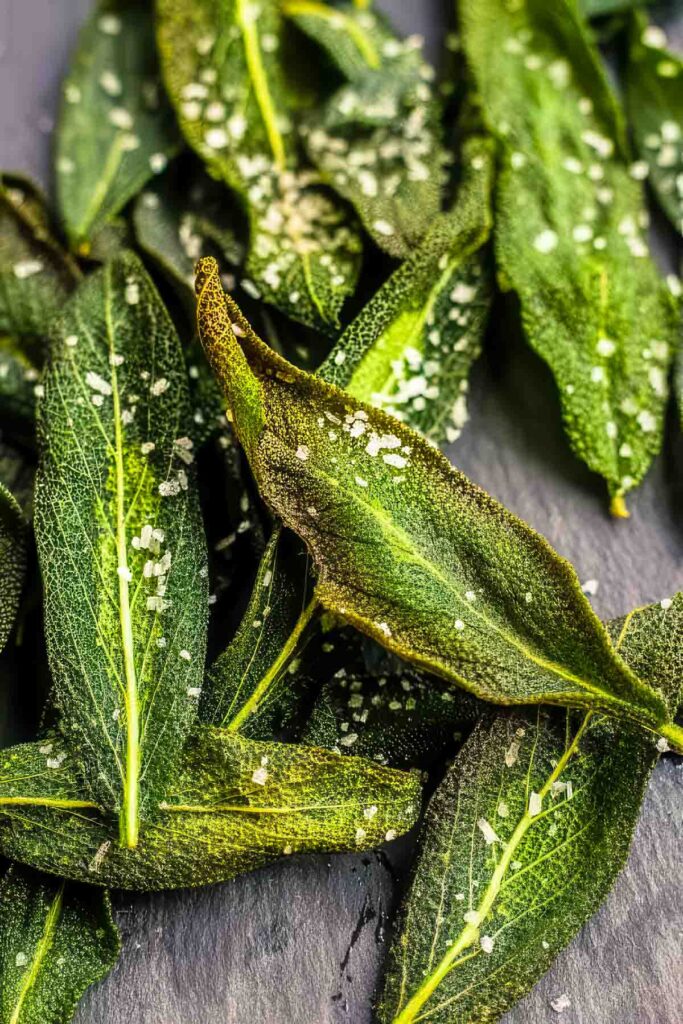
What are Fried Sage Leaves?
Fried sage leaves are exactly what they sound like: whole, fresh sage leaves quickly crisped in hot oil until they're light, crunchy, and full of flavor. Frying mellows their strong, earthy taste and brings out a subtle nuttiness that's both unexpected and delicious. The texture turns lightly crisp, and they're a surprisingly perfect snack on their own. But you can't beat them when used as a garnish during the cold months (check out the image below for an example)!
Ingredients
You only need a few things to make crispy fried sage leaves:
- Fresh sage leaves: Whole leaves, washed and thoroughly dried. Look for firm, green leaves with no brown spots.
- Extra-virgin olive oil: Just enough to coat the bottom of your skillet. You can use a neutral oil like canola or vegetable oil if you prefer.
- Kosher salt or flaky sea salt: For sprinkling immediately after frying to bring out all that delicious flavor. Don't skip this step!
That's it! A short list with big flavor payoff.

How to Fry Sage Leaves
Frying sage leaves is quick, simple, and makes your kitchen smell amazing. Here's how to do it:
In a Skillet (recommended)
- Prep your sage: Make sure the sage leaves are completely dry (water and hot oil don't mix well). Set them aside on a paper towel.
- Heat the oil: Pour just enough olive oil into a skillet to coat the bottom. Heat the oil over medium-high heat until the oil is shimmering but not smoking.
- Fry the leaves: Carefully lay the sage leaves in a single layer in the hot oil. They'll sizzle right away and crisp up in about 30 seconds or less. Keep an eye on them; they go from perfect to overdone quickly.
- Drain and salt: Use a slotted spoon to remove the leaves and place them on a paper towel-lined plate. While they're still warm, sprinkle with kosher or flaky salt.
- Cool and serve: Let them cool for a couple of minutes. They'll crisp up even more as they sit.
Note: Don't toss the oil! Let it cool, strain it, and save it. It's now lightly infused with sage and perfect for drizzling over roasted veggies, pasta, or even scrambled eggs.
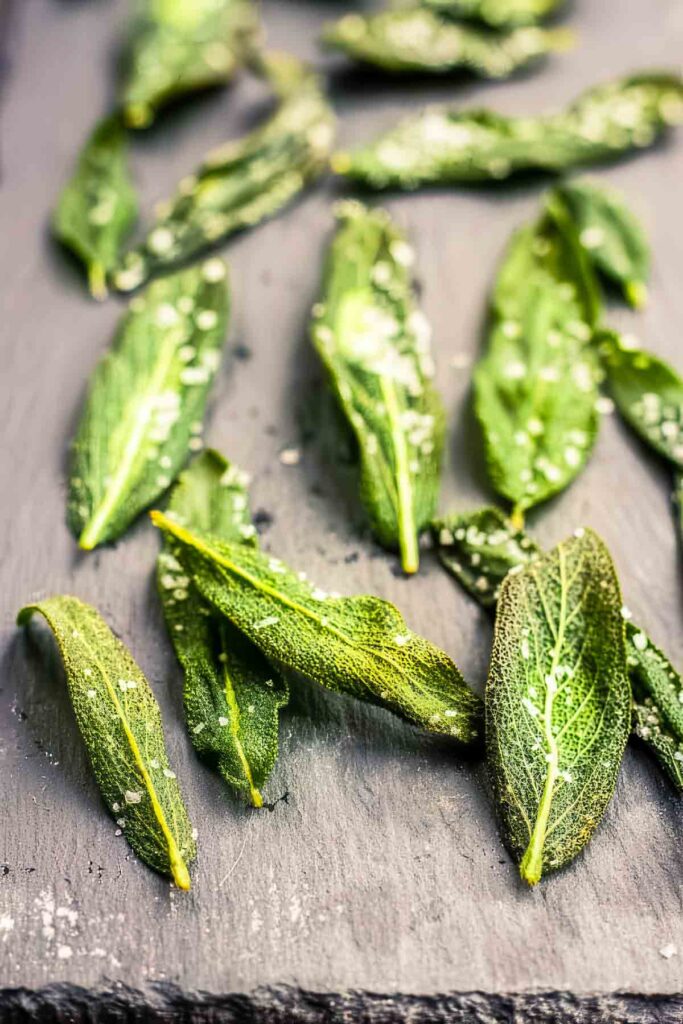
In an Air Fryer
A skillet can't be beat if you want the crispiest leaves, but you can absolutely make fried sage leaves in the air fryer. Here's how to do it:
- Preheat your air fryer to 350°F.
- Lightly spray both sides of your fresh sage leaves with olive oil. Be sure they're completely dry before adding the oil.
- Place the leaves in a single layer in the air fryer basket (make sure they don't overlap).
- Air fry for 2-3 minutes, checking after 2 minutes. They cook fast and can burn quickly, so checking them early is a good idea. If they're not quite done, add another 30 seconds at a time.
- Place them on paper towels and immediately sprinkle with salt while they're still hot.
In Brown Butter (for Pasta, Gnocchi, or Squash)
Frying sage in butter is the classic Italian way to serve it with pasta, and you get a ready-made sauce in the same pan. The leaves won't get quite as shatteringly crisp as they do in olive oil, but the flavor is hard to beat.
- Melt 4 tablespoons of butter in a skillet over medium heat.
- Once the foaming slows, add the dry sage leaves in a single layer.
- Cook for 1 to 2 minutes, swirling the pan, until the leaves are crisp and the butter turns golden brown and smells nutty.
- Lift out the leaves, then spoon the brown butter over gnocchi, ravioli, roasted squash, or mashed potatoes and top with the crispy sage.
Brown butter can go from golden to burnt quickly, so take a look at my guide on how to brown butter if you haven't made it before.
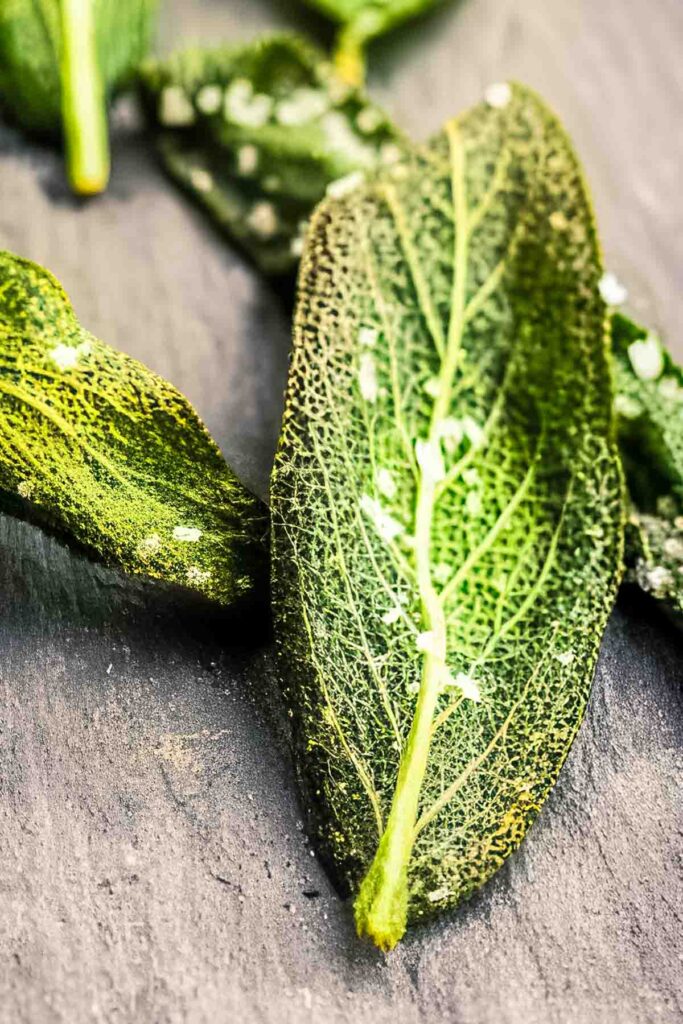
Tips
- Use fresh, whole sage leaves: Look for vibrant green leaves without blemishes. Older or wilted leaves won't crisp up as well or taste as clean.
- Make sure the leaves are completely dry: Any moisture on the leaves can cause the oil to splatter. Pat them dry with a paper towel before frying.
- Don't overcrowd the pan: Fry the leaves in small batches so the leaves stay crisp and don't steam.
- Watch them closely: These fry in seconds. Remove them just as they start to darken slightly, and remember that they'll continue to crisp up as they cool.
- Salt right away: Sprinkle with salt while they're still warm to help the seasoning stick.
- Save the sage oil (optional): Once cooled and strained, the leftover oil will have a subtle sage flavor. Use it for everything from frying eggs to tossing with roasted vegetables.
How to Store Fried Sage Leaves
Fried sage leaves are best enjoyed fresh, but if you happen to have leftovers (rare, but it happens!), here's how to keep them crisp:
- Short-term storage: Place cooled leaves in an airtight container lined with a paper towel. Store at room temperature for up to 3 days. Avoid sealing them while they're still warm, as trapped steam will soften them. To revive them, re-crisp them in a dry skillet for 10-15 seconds over medium heat.
- Freezing: It's not ideal. While technically possible, freezing tends to dull both the flavor and the crunch, so I don't recommend it.
- If you're storing the sage oil, strain it through a fine mesh strainer and refrigerate it in a sealed jar for up to a week.
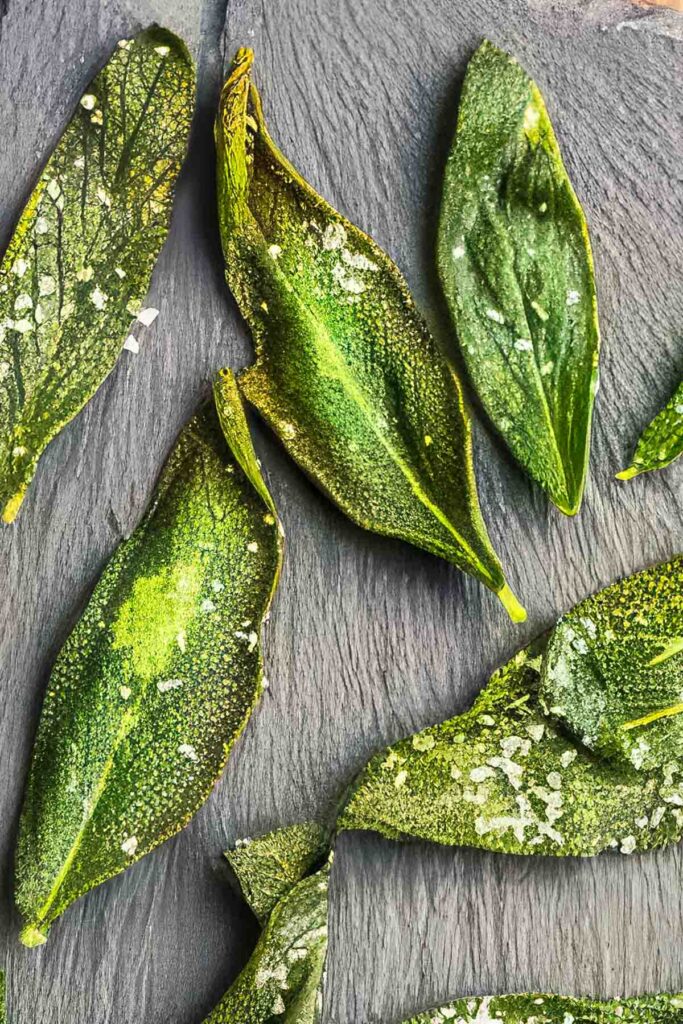
Serving Suggestions
Fried sage adds an instant touch of sophistication and flavor. Here are some of my favorite ways to serve them (other than just enjoying immediately!):
- Thanksgiving and holiday sides: Scatter a few over mashed potatoes, stuffing, or bowls of roasted butternut squash soup, or tuck them around the platter when you serve a roast turkey. They only take a few minutes, so you can fry them while the turkey rests.
- Fall-inspired dishes: Top creamy pumpkin gnocchi, butternut squash ravioli, or mushroom risotto with a few crisp leaves for added texture, flavor and to make the dish "pop". Just a couple of leaves is enough (see the image below for an example).
- Soups and stews: Float a couple on bowls of tomato soup, creamy potato leek soup, or a hearty white bean stew just before serving.
- Roasted meats and fish: Crumble a few over roasted chicken, pork tenderloin, or seared white fish.
- Cheese boards and charcuterie: This is one of my favorite ways to serve them! I love adding them to my boards, and they're gorgeous next to cheeses, cured meats, nuts, and jam.
- As a crostini topping: Assemble your crostini then top each with a fried sage leaf or two. Try replacing the arugula with fried sage leaves in this whipped ricotta crostini.
- On salads or roasted veggies: I like to use them to top a warm grain salad, roasted Brussels sprouts, or even mashed potatoes!
Frequently Asked Questions
Can I make fried sage leaves ahead of time?
Yes, but they're best enjoyed fresh out of the skillet. If you need to prep ahead, fry them a few hours in advance and store uncovered at room temperature.
How long do fried sage leaves stay crispy?
They're crispiest within the first few hours after frying. You can store them in an airtight container at room temperature for up to 3 days, but they may soften slightly. A quick 10-15 seconds in a dry skillet over medium heat brings back the crunch.
Can I use dried sage instead?
No, dried sage won't work for this recipe. You need fresh whole sage leaves to get the right crisp texture and flavor when frying.
Do I need to use extra-virgin olive oil?
Extra-virgin olive oil adds great flavor, but you can use a neutral oil like vegetable or canola oil if preferred. Just make sure it has at least a medium-high smoke point.
What if my sage leaves turn brown too quickly?
That usually means your oil is too hot. Turn the heat down to medium and watch closely, since sage leaves only need about 30 seconds to crisp up.
Why aren't my sage leaves getting crispy?
It's usually one of three things: the leaves were still damp, the oil wasn't hot enough, or the pan was crowded so the leaves steamed instead of fried. Dry them well, wait until the oil shimmers, fry in small batches, and remember that they firm up even more as they cool.
Are fried sage leaves healthy?
They're fried, but you only use a thin layer of oil and a garnish is usually just a few leaves, so they add lots of flavor without much fat. For the least oil, use the air fryer method above.
I've got a few favorite recipes that work perfectly with fried sage leaves. This easy mushroom risotto with gorgonzola is rich and creamy - it's what I make for every holiday. For another holiday dish, try one of my homemade creamed corn recipes (there's a version with cream and one without). When you're in the mood for comfort food, this is the best turkey tetrazzini you'll ever try! And last but not least, this coconut curry with pumpkin and chicken has incredible flavor and is always a hit.
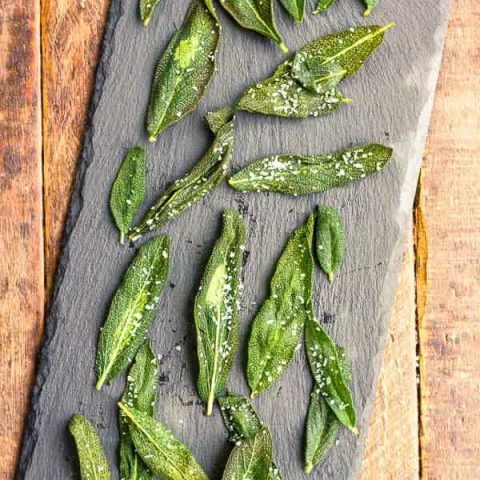
Fried Sage Leaves
Fried sage leaves can be used to top all of your fall dishes for a sophisticated finish, or just enjoy them as a snack!
Ingredients
- 10 whole sage leaves (or as many as you like that will fit in the skillet in one layer)
- Extra-virgin olive oil, enough to coat entire bottom of skillet
- Coarse salt, for sprinkling
Instructions
- Coat the bottom of a skillet with extra-virgin olive oil, heat until shimmering then add sage leaves in a single layer. Watch them closely as it only takes about 30 seconds or so for them to crisp up, then remove them with a slotted spoon. Put them on a plate lined with paper towels then transfer them to a serving plate. Sprinkle immediately with salt to taste.
- Repeat in batches until all sage leaves are fried.
Notes
Fried sage leaves are best served within three days if stored at room temperature.
The sage infused oil can strained and saved for later use or to make more fried sage leaves or for use with other dishes.
Nutrition Information:
Yield: 1 Serving Size: 1Amount Per Serving: Calories: 2Total Fat: 0gUnsaturated Fat: 0gCarbohydrates: 0gFiber: 0gProtein: 0g
This data was provided and calculated by Nutritionix.

- Horseradish Sauce For Prime Rib - September 29, 2026
- Whole Oven Roasted Onions (+ 33 Ways to Use Them!) - January 6, 2026
- Easy Tater Tot Casserole - December 19, 2025
Mark says
After they are somewhat dried in the paper towel both side, I cut them up on a cutting board into 1/2 - 1/4 inch pieces and sprinkle on the pasta dish after serving. Each person takes as much or as little as they want. Particularly good with gnocchi.
Debbie says
Great idea!
WorkingMom says
Amazing!
I came across this recipe because I had so much sage in the garden and wanted to use it, not waste it.
I found a recipe for sage salt, calling for dried or fried sage. I had to look up how one would fry sage and came across this recipe.
I'm usually reluctant to try new things and sage is not an herb that I'm really fond of, but I figured I had nothing to lose except some olive oil and five minutes of my time.
They were AMAZING!
My picky eater kid scarfed down the first batch.
Two fell to the floor, the dog nabbed them and now she's following me around,, looking for more!
I tried them with reluctance, then ate about 35 more leaves.
The health benefits of sage are great, so this is a go-to snack for us now.
The flavour has a hint of sage - seriously, a hint - but tastes more savoury and even buttery.
Sent the recipe to my mother in law who also has a massive sage plant, and to my brother in law, a chef and culinary instructor at a college. He's doing a student feature on Indigenous Canadian culinary, and this will be a perfect addition.
Thanks so much for opening my mind (and my mouth) to something new!
Denae says
Oh, my, goodness... These are wonderful?
I was in my garden this morning looking at the giant bush of sage that has developed over the past few weeks. And of course, I searched for what to do with the leaves and stumbled across your recipe. I was admittedly hesitant, br a use like yourself, sage is by far my favorite herb. I picked 4 leaves and brought them in the house for experimentation. Lemme tell you... this frying trick makes them almost magical. I used avocado oil and Himalayan pink salt, and after I popped the first one in my mouth, the other three magically disappeared after. Wow. I know the fate of the over-abundance of leaves I have now! Excuse me while I run back out to the herb patch...
Georg says
Has anyone acutally tried to fry these up in a big batch and store them in a jar? I fried them up yesterday and salted more than usual, now they're just sitting in the pan to loose some more moisture. Guess I'll just give it a try and tell you guys in a week or so. But if you think about it, something this oily and salty and full of natural oils that surely are unappealing to bacteria should not go bad quickly.
Brandie says
Oh. My. Goodness. These are absolutely delectable. How am I just now finding out that this is the best snack on the planet???
j says
just tried this, took ~1 minute for the leaves to end up crispy. id guess the freshness of the leaves, or how much water they are holding, determines how long it takes them to fry to a nice crunch.
Larry Lamont says
Love your recipes
Kristy Bernardo says
Thank you so much!! 🙂 This made me smile and I really appreciate it.
scottie mancer says
would like to know how else I can use sage in, I prefer if possible to put it in the meal like stews stir frys etc.
thanks scottie
Kristy Bernardo says
Hi Scottie,
You can use sage in a recipe versus frying them. I did a Google search for you, the link is here.
scottie mancer says
hi can you tell me what else I can use sage in ,I don't want it sitting on top of a meal but in it .is this possible ,
Trish says
Hi! Can I make these ahead of time or will they loose there crispiness?
Kristy says
Hi Trish! That's a difficult one for me to answer because they've always disappeared within minutes around here. My guess is that they'll be fine but you'd have to test them in advance to be sure. Sorry that I can't be more helpful! - Kristy