
This is the foolproof standing rib roast you've been looking for that steals the holiday show. Juicy, tender prime rib with an incredible crust, and it all starts with this wet prime rib rub made with just Dijon mustard, garlic, and cracked peppercorns.
I'll walk you through exactly how to bring the roast to room temperature, tricks to get that gorgeous crust, and how to finish perfectly pink (we even have a downloadable temperature chart just for prime rib). We'll cover bone-in vs. boneless, the exact internal temps to aim for, and the easy, creamy horseradish sauce.
Quick answer: How to cook a standing rib roast:
Roast the bone-in prime rib at 450°F for 20-30 minutes, then lower the oven to 325°F without opening the door. Keep roasting until a thermometer in the center of the roast reads your pull temperature. Plan on roughly 17-19 minutes per pound total for medium-rare. Remove the roast from the oven, tent it loosely with foil, and let it rest for 20-30 minutes. The temperature will rise another 5-10°F while it rests.
Rare: pull at 115-120°F → about 120-125°F after resting
Medium-rare: pull at 125°F → about 130-135°F after resting
Medium: pull at 135°F → about 140-145°F after resting
An 8-lb, 4-rib roast takes about 2½ hours for medium-rare and serves 8 to 10 people (plan on 1 rib for every 2 guests). Start checking the temperature about an hour before you expect it to be done, or better yet, use a leave-in thermometer with an alarm set to your pull temperature. That's what I've used for years, and it takes all the guesswork out of cooking such an expensive cut.
Tip: The temperature climbs slowly at first, then much faster as the center heats up. Once you're within about 15 degrees of your pull temperature, check it often.
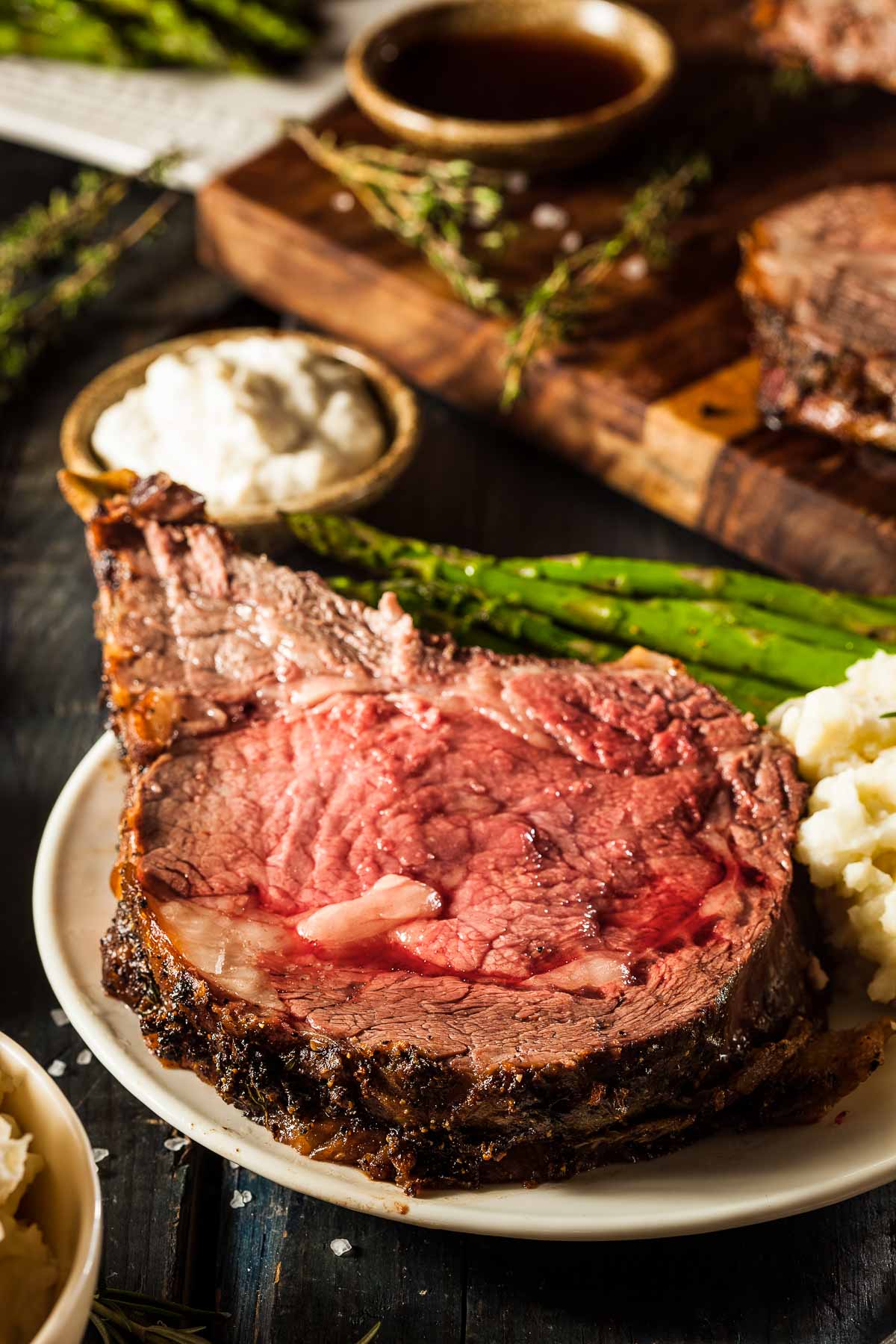
I've made this standing rib roast for every Christmas dinner for years. If I find a good deal on a boneless roast, then I'll make this boneless prime rib with a garlic-herb crust, but a prime rib roast is always on the menu. And I always pair it with this easy mushroom risotto with gorgonzola!
Jump to:
- Ingredients
- What to Buy
- Step-by-Step Instructions
- Standing Rib Roast Cook Time & Temperature Chart
- Tips for the Perfect Standing Rib Roast
- What To Serve with Prime Rib: Horseradish Cream & Au jus
- Reheating and Using Leftovers
- Frequently Asked Questions
- Related
- Pairings
- Standing Rib Roast with Garlic-Mustard Wet Rub
Ingredients
For the Roast
- 1 bone-in standing rib roast (prime rib), about 8 pounds (4-7 ribs works; adjust the cook time per the prime rib temperature chart below)
Prime Rib Wet Rub (Dijon-Garlic-Peppercorn Wet Rub)
- ½ cup Dijon mustard
- 1 heaping tablespoon chopped garlic (3-4 cloves; make a paste with the salt)
- 2 tablespoons coarse kosher salt
- 1-2 tablespoons coarsely ground black pepper
Horseradish Cream
- 1 cup sour cream
- ¼ cup prepared horseradish (more or less to taste)
- Kosher salt & freshly ground black pepper, to taste
- 1 spoonful Dijon mustard (optional)
What to Buy
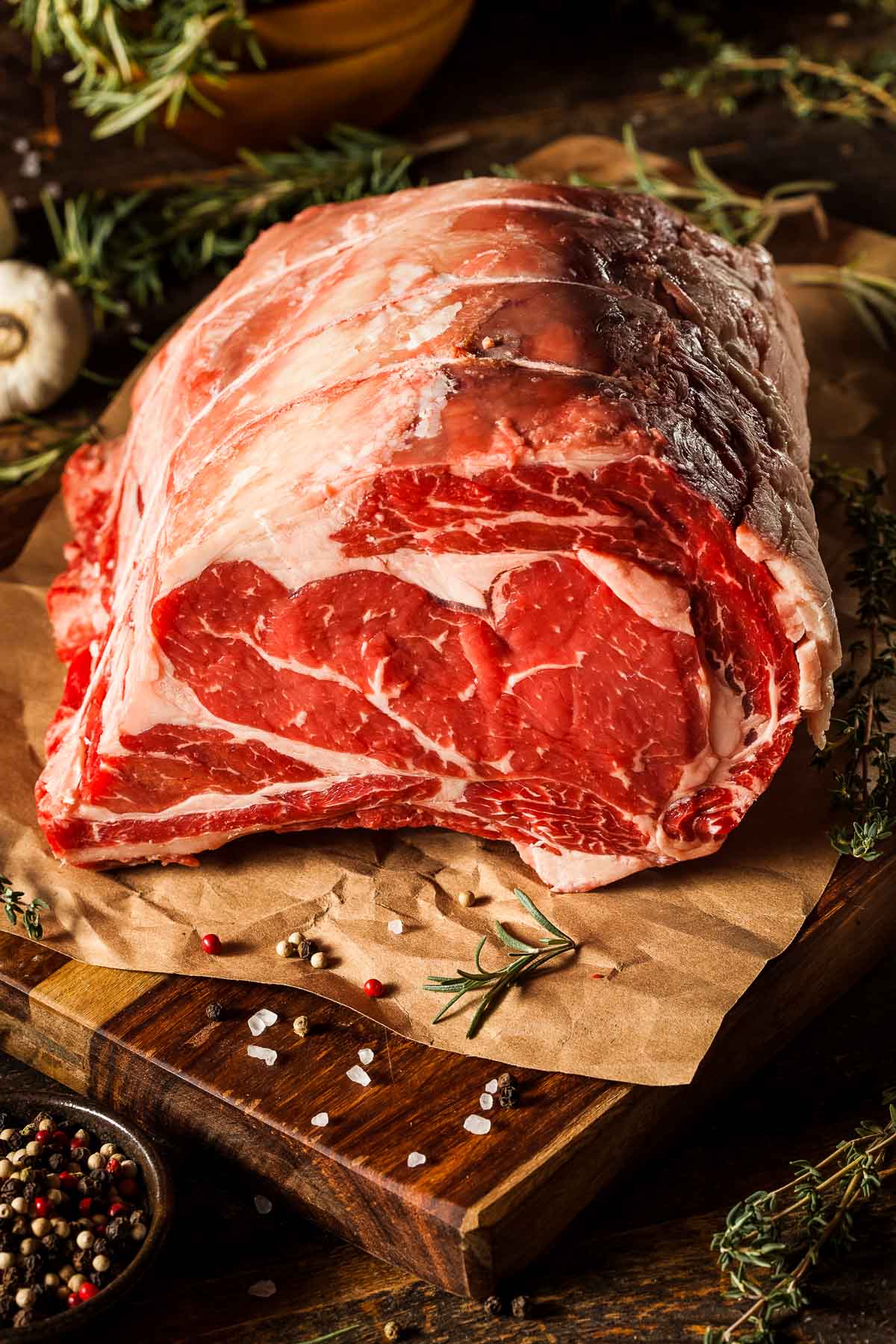
- Bone-in vs. boneless: Bone-in roasts (true "standing" rib roasts) deliver the most flavor and juiciness, plus the bones act as a natural roasting rack. Boneless is easier to carve but tends to cook slightly faster.
- Rib count & weight: Each rib serves about 2 people. A 4-rib roast weighs around 8 lbs and serves 8-10, while a full 7-rib roast can serve up to 14.
- Grade matters: Prime grade has more marbling and tenderness, but choice grade is still excellent if cooked properly.
- Ask your butcher: Request the roast be tied for even cooking and easier carving, and have them French the bones if you want a show-stopping presentation.
Step-by-Step Instructions
- Bring the roast to room temperature: Remove the prime rib from the refrigerator and let it sit out for 1½-2 hours before cooking. This allows for more even roasting and prevents the center from being undercooked while the outside overcooks.
- Preheat the oven: Set your oven to 450°F (232°C).
- Prepare the wet rub: On a cutting board, mash the chopped garlic and salt together with the flat side of your knife to create a paste. In a small bowl, mix the garlic paste with the Dijon mustard and coarsely ground black pepper. Let the mixture sit for 15 minutes to allow the flavors to meld.
- Apply the wet rub: Place the roast on a rack in a roasting pan (ribs down). Slather the mustard mixture over the entire surface of the roast, making sure to coat all sides.
- Initial high-heat sear: Place the roast in the oven and roast for 20-30 minutes at 450°F until the outside has browned.
- Lower the oven temperature: Reduce the oven temperature to 325°F (163°C) without opening the oven door. Continue roasting until the internal temperature reaches 120-125°F for medium-rare. See the temperature chart for prime rib below to make any adjustments. Always use a reliable meat thermometer for accuracy!
- Rest the roast: Remove the roast from the oven and tent it loosely with foil. Let it rest for 20-30 minutes before carving (the temperature will rise by about 5-10°F as it rests).
- Carve & serve: Slice between the bones for large rib portions, or remove the bones and carve thin slices. Serve it with the horseradish cream.
Standing Rib Roast Cook Time & Temperature Chart
Method: Roast at 450°F for 20-30 minutes, then lower to 325°F without opening the oven door.
Always use an accurate meat thermometer as that's the easiest and most dependable way to get a perfect standing rib roast. And treat these times as estimates, because every roast and oven is different.
Start checking the temperature about an hour before your earliest estimated time, or even better, use a leave-in thermometer with an alarm. This is what I've always used and it truly makes cooking prime rib a breeze. As a rule of thumb, plan on roughly 17-19 minutes per pound total for medium-rare (larger roasts often need less time per pound, because extra ribs add length rather than thickness, so please keep that in mind as well).
| Rib Count | Weight | Serves | Total Time (Medium-Rare) |
|---|---|---|---|
| 2 ribs | 4–5 lb | 4 | 1¼–1½ hr |
| 3 ribs | 6–7½ lb | 6 | 1¾–2¼ hr |
| 4 ribs | 8–10 lb | 8–10 | 2¼–3 hr |
| 5 ribs | 10–12½ lb | 10 | 2¾–3½ hr |
| 6 ribs | 12–15 lb | 12 | 3¼–4 hr |
| 7 ribs | 15–17 lb | 14 | 3¾–4½ hr |
When to Pull Your Standing Rib Roast
| Doneness | Pull From Oven At | Final Temp After Resting |
|---|---|---|
| Rare | 115–120°F | 120–125°F |
| Medium-rare (recommended) | 125°F | 130–135°F |
| Medium | 135°F | 140–145°F |
Once you pull your roast from the oven, tent it loosely with foil and let it rest for 20-30 minutes. The internal temperature will continue to rise another 5-10°F.
The ends are usually thinner so they'll cook slightly more than the center, which works well if you have guests who prefer different levels of doneness (my dad likes his more well-done, so he always gets the end pieces).
Tips for the Perfect Standing Rib Roast
- Choose the right cut: Select a well-marbled prime rib for maximum flavor and tenderness. Both bone-in and boneless work, but bone-in is a true "standing" rib roast.
- Let It come to room temperature: This step is key for even cooking. Take the roast out of the refrigerator 1½-2 hours before roasting.
- Use a meat thermometer: Guessing is risky when cooking an expensive cut like prime rib. Invest in a meat thermometer so you can monitor the roast without opening the oven repeatedly. They're inexpensive and can alert you once the standing rib roast reaches your chosen temperature, making it truly stress-free!
- Don't skip the high-heat sear: That initial blast at 450°F locks in juices and creates a beautifully browned crust.
- Season generously: The wet rub should coat every inch for the best and most consistent flavor. It has plenty of salt already, so unless you use a different rub or skip it entirely, you should be good to go.
- Plan for resting time: Resting allows the juices to redistribute and keeps the meat moist. Tent with foil for at least 20 minutes before carving.
- Carving technique: For large servings, slice between the bones. For thinner slices, remove the bones first, then slice it across the grain.
- Save the drippings: Use the flavorful drippings in the roasting pan to make au jus for serving alongside your horseradish cream. See below for more detailed instructions.
- Adjust for the size & shape of your roast: If your roast is unusually short, long, or thick, adjust the cooking time and start checking temperatures earlier than the chart suggests.
What To Serve with Prime Rib: Horseradish Cream & Au jus
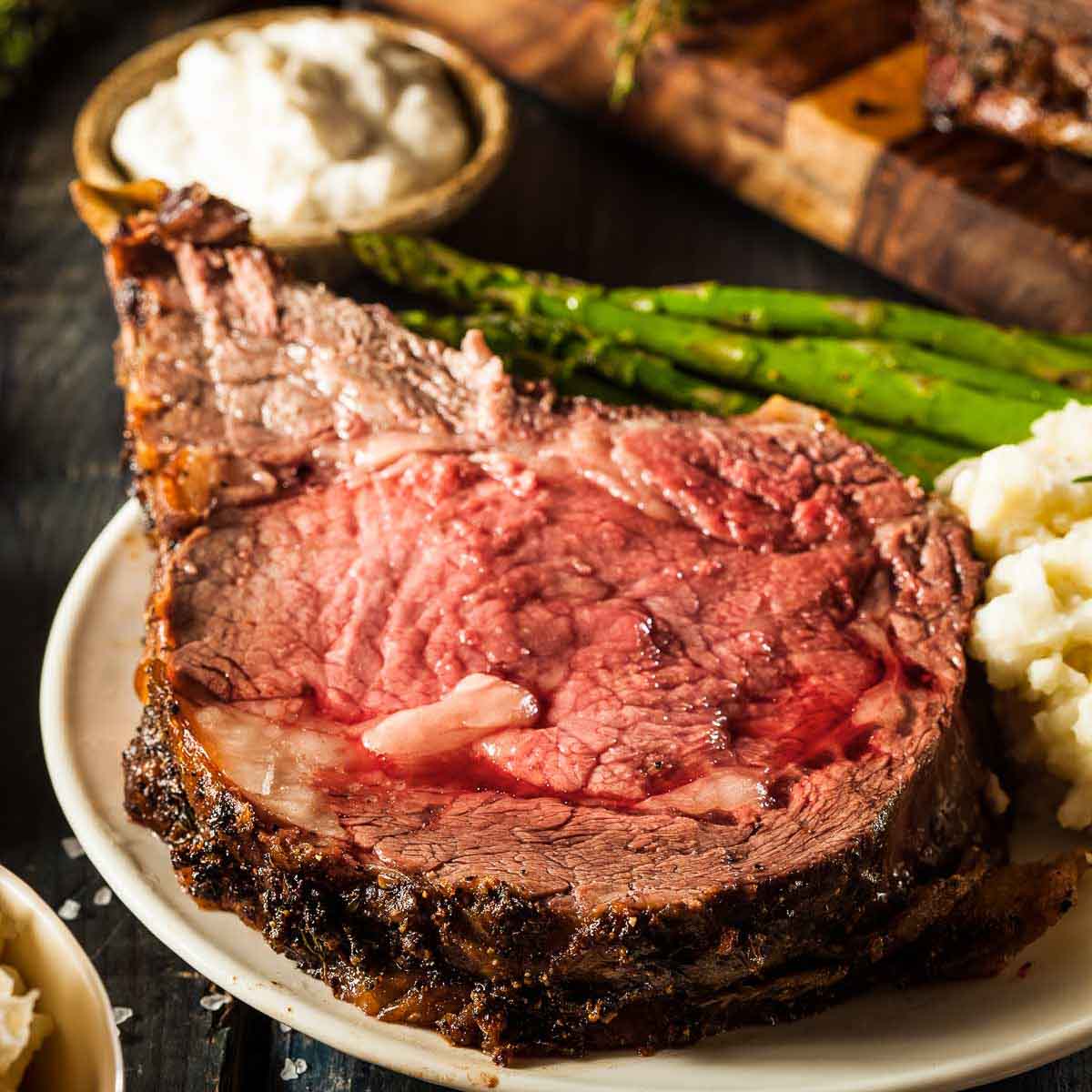
Horseradish cream is my family's favorite sauce to serve with prime rib, and I've never served it without some. But we also love au jus, and they're terrific served together, so either choose your favorite or serve both! I've included the recipes for both in the printable recipe card.
How to Make Au Jus
Au jus ("with juice") is a simple, flavorful sauce made from the roast's drippings. I don't usually make the au jus, opting instead to go with just the horseradish sauce, but here are the instructions if you'd like to make both:
Ingredients
- Pan drippings from your cooked prime rib
- 1-2 cups beef broth (low-sodium)
- ½ cup red wine (optional but adds a lot of flavor)
- Salt & freshly ground black pepper, to taste
Instructions
- Collect the drippings: After removing the roast from the pan, pour the drippings into a heatproof measuring cup. Let them sit for a few minutes so the fat rises to the top. Skim off most of the fat.
- Deglaze the pan: Place your roasting pan over medium heat on the stovetop. Pour in the red wine (if using) or a small amount of the beef broth, scraping up any browned bits from the bottom of the pan.
- Add the broth: Stir in the beef broth and the reserved drippings, then simmer for about 5 minutes or so.
- Strain it for a smooth sauce: Pour the au jus through a fine-mesh strainer into a serving bowl or gravy boat.
- Taste & adjust: Season with salt and pepper as needed. Serve warm alongside the prime rib.
- Note: If you like a slightly thicker au jus, whisk 1 teaspoon cornstarch into 2 tablespoons cold water and stir it in during the simmering step.
Reheating and Using Leftovers
One of the best things about making prime rib is having leftovers (and they're just as delicious the next day)! Here are some great ways to use them:
- Reheated and served with sides: We always have loads of leftovers after the holidays, so we usually just reheat our prime rib with leftover risotto, mashed potatoes, etc.
- Prime Rib Sandwiches: Thinly slice leftover prime rib and pile it onto crusty bread or a toasted baguette. Add horseradish cream, caramelized onions, and maybe a slice of provolone or Swiss for the ultimate sandwich.
- French Dip: Serve those sandwiches with a side of warm au jus for dipping.
- Breakfast Hash: Dice leftover beef and toss it with crispy potatoes, onions, and bell peppers. Top with a fried or poached egg.
- Steak and Eggs: Reheat slices of prime rib and serve alongside eggs and buttered toast.
- Prime Rib Tacos: Shred or slice the meat, warm it briefly, and tuck it into tortillas with chimichurri, pico de gallo, or pickled onions.
- Beef & Barley Soup: Use chopped leftovers as the base for a hearty soup!
Reheating Leftovers
Prime rib is best when it's reheated gently. High heat can overcook the meat and make it tough, so go low and slow.
- Oven: Preheat oven to 250°F. Place slices in a baking dish with a splash of beef broth or au jus, cover with foil, and heat until it's warmed through (about 15-20 minutes depending on its thickness).
- Stovetop: Heat slices gently in a skillet with a bit of beef broth over low heat, covering it with a lid to keep the meat from drying out.
- Sous vide (ideal for keeping medium-rare): Seal slices in a vacuum bag or zip-top bag and heat in a 135°F water bath for about 1 hour.
- Microwave: Use low power in short intervals (20-30 seconds), adding a splash of broth and covering with a microwave-safe lid to retain moisture.
Frequently Asked Questions
What is a standing rib roast?
A standing rib roast is the same cut of beef as prime rib (it comes from the primal rib section of the cow). It's called "standing" because it's roasted upright on the rib bones.
What's the difference between prime rib and ribeye?
Prime rib is the whole roast, including the rib bones, while ribeye is a steak cut from that roast before cooking.
How much prime rib should I serve per person?
Plan on about 1 rib for every 2 guests. Keep in mind that you'll likely be serving sides with this, so that amount should be plenty.
What internal temperature should prime rib be cooked to?
For medium-rare (recommended), cook until the internal temperature is 120°F-125°F. The temperature will rise another 5-10°F while it's resting. See our downloadable temperature chart for prime rib for more details.
Can I use a different rub instead of the mustard-garlic one?
A classic salt and pepper rub works really well, especially if you're serving it with both the au jus and horseradish sauce.
How long should I rest the roast before carving?
At least 20 minutes to allow the juices to redistribute.
What's the best way to store leftovers?
Wrap any leftovers tightly in foil or store in an airtight container in the fridge for up to 4 days, or freeze it for up to 3 months.
Related
Looking for other recipes like this? Try these:


Pairings
These are my favorite dishes to serve with a standing rib roast:


Standing Rib Roast with Garlic-Mustard Wet Rub
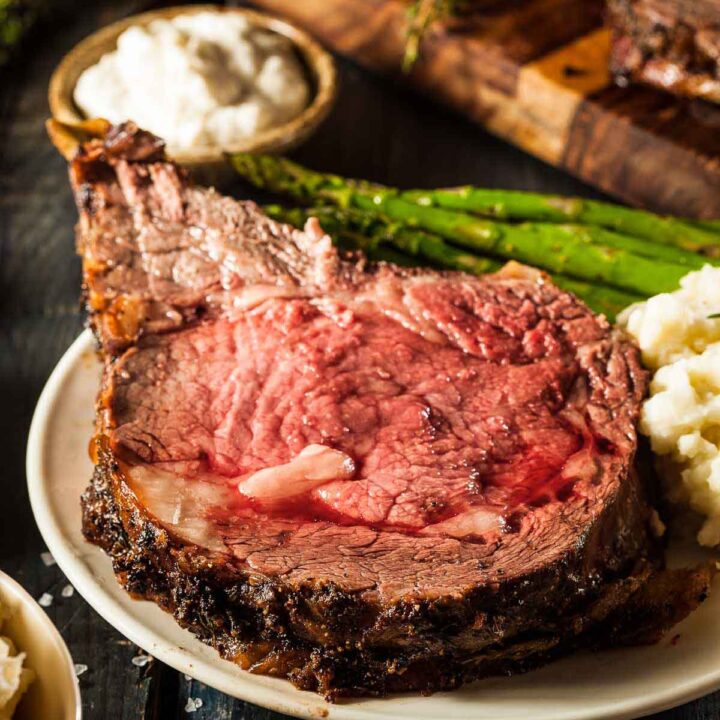
A standing rib roast is a perfect holiday recipe: it's stress-free, impressive, and most importantly, incredibly delicious!
Ingredients
For the Roast
- 1 Standing Prime Rib Roast, about 8 pounds
- 1 heaping tablespoon chopped garlic
- 2 tablespoons coarse kosher salt
- 1-2 tablespoons coarsely ground black pepper
- ½ cup dijon mustard
For the Horseradish Cream
- 1 cup sour cream
- ¼ cup prepared horseradish
- kosher salt & freshly ground black pepper, to taste
- a spoonful of dijon, optional
For Au Jus
- Pan drippings from your cooked prime rib
- 1–2 cups beef broth (low-sodium)
- ½ cup red wine (optional but adds a lot of flavor)
- Salt & freshly ground black pepper, to taste
Instructions
- Preheat oven to 450°F.
- Bring roast to room temperature (allow to sit on counter for at least an hour).
- Put chopped garlic and salt together onto a cutting board. Using the side of your chef's knife, press down firmly while sliding your knife, making a paste. Mix garlic paste with mustard and pepper. Set aside for at least 15 minutes to allow flavors to meld.
- Place roast on a rack in a roasting pan. Slather roast with mustard mixture, covering all sides. Roast for approximately 20-30 minutes or until the outside is nicely browned.
- Reduce heat to 325°F. Continue cooking roast for approximately 2 hours more or until an internal temperature reaches 120-125°F (this will give you a medium-rare roast which, for prime rib, is recommended). Remove from oven and let rest for 20 minutes. Carve and serve with horseradish cream on the side.
For the Horseradish Cream
- Drain the horseradish if it's very wet.
- Stir together the sour cream, horseradish, and Dijon (if using).
- Season with salt and pepper, taste, and add more horseradish if desired.
- Cover and refrigerate at least 30 minutes, and up to 2 days. Remove from the fridge about 15 minutes before serving.
For Au Jus
- After removing the roast from the pan, pour the drippings into a heatproof measuring cup. Let them sit for a few minutes so the fat rises to the top. Skim off most of the fat.
- Place your roasting pan over medium heat on the stovetop. Pour in the red wine (if using) or a small amount of the beef broth, scraping up any browned bits from the bottom of the pan.
- Stir in the beef broth and the reserved drippings, then simmer for about 5 minutes or so.
- Pour the au jus through a fine-mesh strainer into a serving bowl or gravy boat.
- Season with salt and pepper as needed. Serve warm alongside the prime rib.
- Note: If you like a slightly thicker au jus, whisk 1 teaspoon cornstarch into 2 tablespoons cold water and stir it in during the simmering step.
Notes
Rub for rib roast from chow.com.
Nutrition Information:
Yield: 8 Serving Size: 1Amount Per Serving: Calories: 877Total Fat: 68gSaturated Fat: 28gUnsaturated Fat: 40gCholesterol: 203mgSodium: 1965mgCarbohydrates: 4gFiber: 1gSugar: 2gProtein: 52g
I use Nutritionix to calculate the recipes on this website.

- Horseradish Sauce For Prime Rib - September 29, 2026
- Whole Oven Roasted Onions (+ 33 Ways to Use Them!) - January 6, 2026
- Easy Tater Tot Casserole - December 19, 2025
Michelle | A Dish of Daily Life says
I need to try this. My oldest son loves prime rib. My father in law is always the one who made it (my in laws live next door) so I never felt the need to make it myself. He was such a great cook! We lost him to cancer a couple summers ago, and we miss him so much. I've tried to go through and make his old recipes to preserve them for our family, but I haven't come across how he made his prime rib in his notebook. My son would be so surprised if I made this for him. 🙂
Kristy Bernardo says
Oh Michelle, it's such a lovely thought that you might make this to surprise your son. HUGS and Happy Holidays to you!! xoxo
Sharon @ What The Fork Food Blog says
I love making rib roasts but I never make it the same way twice. Can't wait to try this one, it looks AMAZING!
Kristy Bernardo says
Thanks, Sharon!
Dina says
WOW! This looks amazing! I will definitely be adding this to my holiday table. Looks wonderful, Happy Holidays!
Kristy Bernardo says
Thanks so much, Dina! Happy Holidays to you, too!
John@Kitchen Riffs says
I haven't made a standing rib roast in years! And I've had it on the brain recently -- really need to make one again. And I agree you need to pair horseradish with it!
Kristy Bernardo says
YES...Horseradish is key! Thanks, John. I hope you and the Mrs. have a very wonderful holiday!